

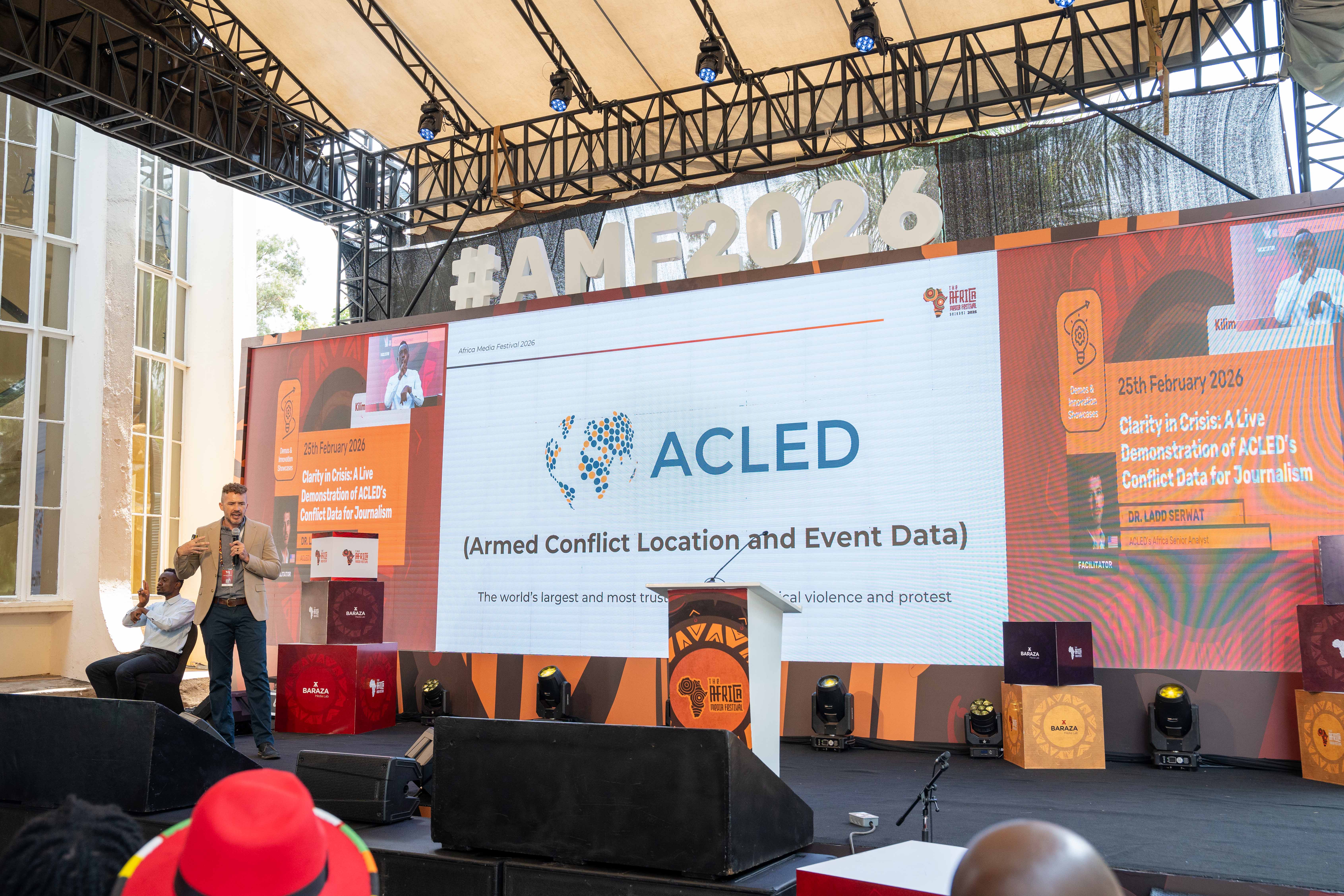
The Africa Media Festival returned to Nairobi for its fourth edition on 25 and 26 February 2026, and the festival report is finally out. For those of us who were in the room, it makes for a refreshing look back, and a good prompt to start clearing the calendar for 2027. Convened by Baraza Media Lab at the National Museum, this year’s gathering brought together 650 participants from 31 countries under the theme "Resilient Storytelling: Reimagining Media Freedom." For anyone working in media, public relations or communications on the continent, that combination of scale and focus is worth sitting with.
Lead Curator Martie Mtange set the tone for the edition in her opening essay, "From The Curator’s Desk." Writing against the backdrop of RightsCon’s cancellation that year, she posed a question worth sitting with: "What does it mean that we were able to have this conversation at all?" Rather than chase whatever was trending, the curatorial brief put a harder question in front of every session on the programme: what does Africa need from its media right now? That question runs through the rest of the festival, and it is what separates AMF from a conference built around speakers who happened to be available.
AI, treated as newsroom reality
The most consistent thread across the programme was artificial intelligence, discussed as something newsrooms are already living with rather than a future problem. Sam Moseti’s session, "Why AI Transparency Matters for Media Freedom," made the case plainly: "We cannot demand transparency from powerful systems if we are not transparent about how we use them ourselves." The same tension ran through "African Journalism at the Crossroads: Navigating the AI Revolution" with Dr Rose Kimani and Attila Mong, through the AI Frontier panel featuring Christine Mungai, Arijit Ghosh, Anita Eboigbe, Catherine Gicheru and Justin Arenstein, and through "African Newsroom From Scratch: Human, Automate, or Abandon?" with Rachael Akidi, Mallon Makhapila and Chakuchanya Harawa. San’aa Njeri’s session, "Ancestral Intelligence in the Age of AI," offered the sharpest line of the festival on the subject: "The future we refuse to imagine is the future we quietly surrender."
Press freedom under pressure from every direction
A second thread tracked press freedom under pressure on several fronts at once: legal, digital, political and economic. "When the Law Becomes the Weapon," with Antonio Zapulla, Catherine Anite, Lawrence Mute and Linda Bach, examined how lawfare is being used against journalists across African jurisdictions. "Silenced, Not Gone: Why Eritrea’s Jailed Journalists Still Matter," with Yiralem Fissseha, Nduko o’Matigere, Muthoki Mumo and Vanessa Tsehaye, kept a case in front of an international audience that is easy to lose track of. A session on the Democratic Republic of Congo and Sudan, billed as the "Triple Threat" and featuring Dr. Simiyu, Jonas Kiriko, Tom Rhodes and Francesca Ekondaho, argued that journalism should not end with reporting.
Money, after the donors pull back
A third thread addressed what happens to African newsrooms when donor funding contracts. "Beyond Donors: Rethinking the Funding Mix," led by Fiona Nzingo, dealt directly with the ripple effects of the 2025 United States funding cuts. "Media & Monetization: What Has Worked?" brought Dara Ajala, Caleb Maru and Beza Dawit together to compare what is actually generating revenue, as distinct from what sounds good in a pitch deck.
Who tells the story, and who protects the teller
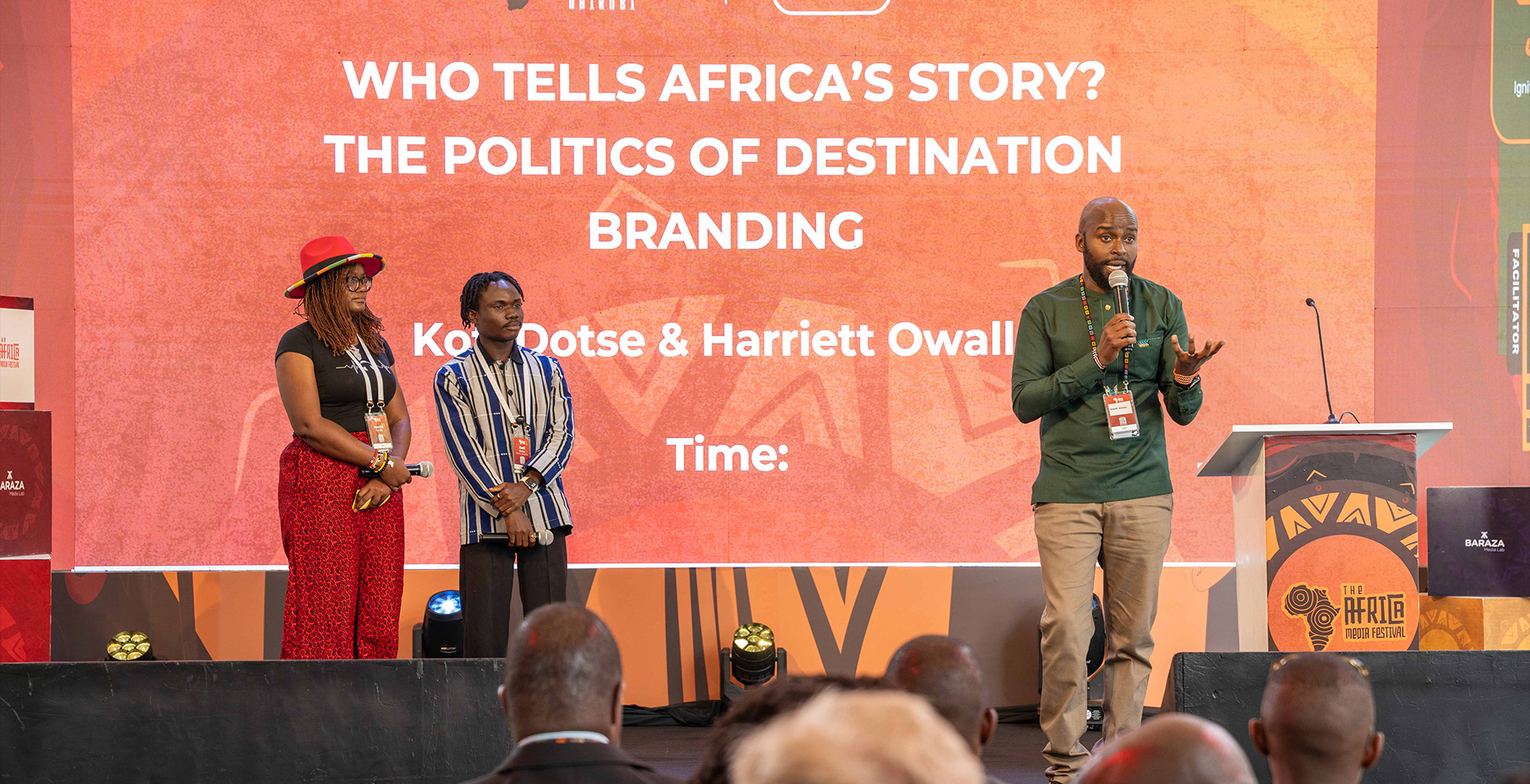
A fourth thread looked at who gets to tell African stories and how. "Who Tells Africa’s Story? The Politics of Travel Journalism," with Kofi Dotse and Harriet Owala, made the point directly: "When African writers are given the opportunity to tell our own stories, we expand what is possible." "Community Storytelling Under Pressure," with Ramadhan Said and Anesu Chikumba, drew a useful line between story-taking and storytelling. Podcasting had its own strand, from Cyril Kwadzo and Barbara Gruber on scaling without selling out, to Omar Hemed and Eric Namayi’s work on children’s podcasting through Mtoto News. "African Feminism, Media Power & Digital Safety," with Dr. Zippy Okoth, Joy Lusige and Dr. Robi Koki, and "Shielding the Storyteller," with Mwende Mukwanyaga, both turned to protecting the people doing the telling, not only the stories themselves.
Keynotes and recognition
Keynote addresses came from Catherine Gicheru, founder of the Africa Women Journalism Project, and Daniel Kalinaki, a Baraza Media Lab board member. The festival also hosted the Africa Media Awards 2026, presented jointly with the African Editors Forum and Journalists for Human Rights, recognising work that met the standard the rest of the programme was arguing for.
Why it belongs on the calendar
For anyone whose work touches African media, whether commissioning coverage, managing a client’s press relationships, or building comms strategy for the region, AMF functions less as a networking circuit and more as a working map of where the industry’s pressure points sit right now. The 2026 edition named four of them clearly: AI governance and transparency, press freedom under attack from multiple directions, revenue diversification, and the ethics of whose story gets told. Baraza Media Lab has already confirmed a fifth edition for 2027. Anyone weighing whether to make the trip next time can reach the organisers directly at info@barazalab.com.
Get the full report here